
When several manufacturers all say they can meet your need, gut feeling is a poor tie-breaker. A scorecard, meaning a short list of criteria applied the same way to every supplier, turns a vague impression into something you can explain and defend later.
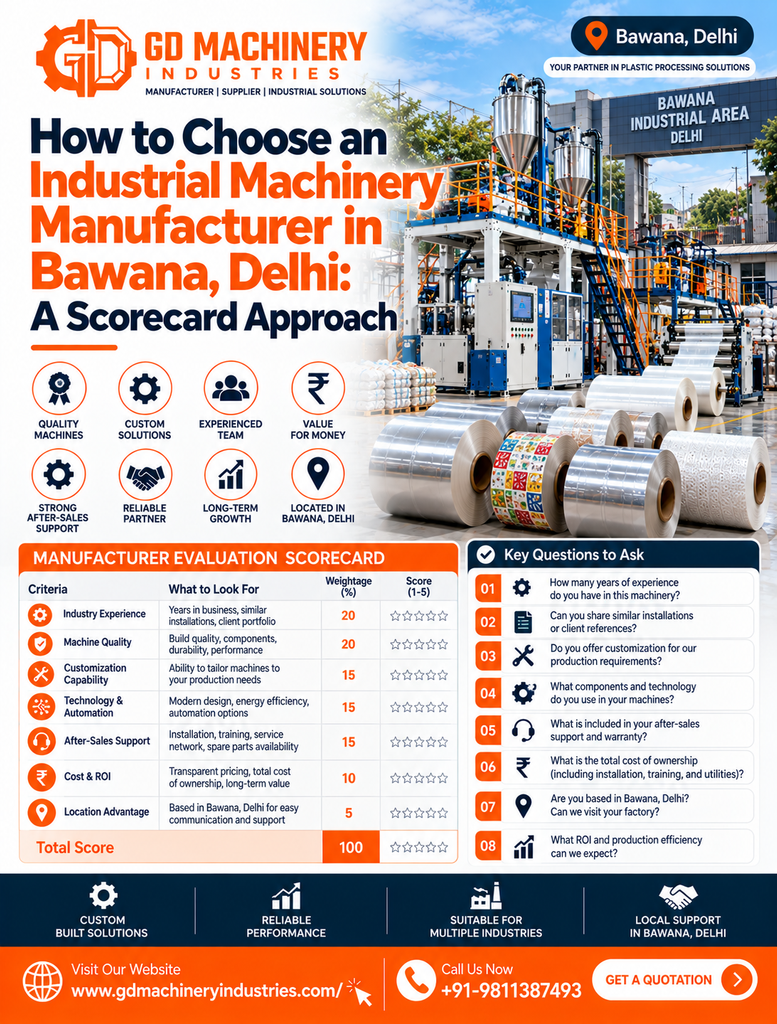
Step one: write the brief everyone quotes against
Spell out what you make, what goes in, the sizes involved, the output you need, your shift pattern and your quality bar. Add site facts such as space, power and material movement, and mention any machines the new one must link to. Ask each supplier to list any information still missing before they can recommend a final configuration.
Step two: score each supplier
| Criterion | What to look for |
|---|---|
| Technical fit | The machine suits your material, and its working width and adjustment range match the brief |
| Stated performance | Output figures come with the material, settings and conditions behind them |
| Safety | Guarding, emergency stops, isolation procedures and safe operator access |
| Documentation | Manuals, a written specification and a clear scope of supply |
| Support | Installation, commissioning, training, spare parts and a clear warranty process |
| Ownership cost | Energy, consumables, labour, maintenance, waste and downtime estimated on the same assumptions |
| Evidence | A demonstration or a reference application relevant to your material |
Step three: verify what you are told
Get the claims that matter on paper. Where a specific finish or quality grade is critical, ask how the supplier will prove it. Promises made only in conversation have a habit of disappearing from the final scope, so make sure anything that matters appears in the documents.
Step four: separate must-haves from nice-to-haves
Core needs could be compatibility with your material, a set working width, safety features and a quality target. Extras may help, but weigh them against your production plan and budget. Ask suppliers to state their assumptions and to explain wherever the proposed machine departs from your brief.
Step five: turn the decision into an acceptance checklist
Ahead of the order, write down the agreed set-up, safety features, bundled accessories, paperwork and any performance tests both parties accept. Assign owners for delivery, installation, utilities, training and commissioning, and keep optional extras on their own list.
When the machine arrives, check it against the purchase documents and note every open item with an agreed follow-up.
Where location fits in the score
A manufacturer close by can make visits and communication easier, and that deserves some weight. It should never outweigh technical fit, safety and the quality of support.
Final Thoughts
Choosing a machinery manufacturer is both a technical and a commercial decision. A clear brief, comparable quotations, a safety review and a realistic cost estimate let you decide with evidence rather than impressions.
Frequently Asked Questions (FAQs)
1: How many suppliers should I shortlist?
A: Enough to understand the market, as long as each one quotes against the identical brief.
2: What makes a quotation technically complete?
A: It names the configuration and specifications, lists inclusions and exclusions, and states delivery scope and support terms.
3: Why do output figures need context?
A: The same machine can produce different amounts depending on material and settings, so the test conditions matter.
4: What after-sales topics should I raise?
A: Raise installation, operator training, manuals, spares, warranty and how to reach technical help.
5: Does a nearby manufacturer always win?
A: No. Closeness is a convenience; fit to your job, safety and support should carry more weight.