
Many processing problems begin before the material reaches the extruder or moulding machine: uneven blends, stray moisture, mixed-up batches. A granule mixer cum dryer addresses part of that preparation stage. The label, however, can hide quite different technologies, so the first job is to be clear about what you need the machine to do.
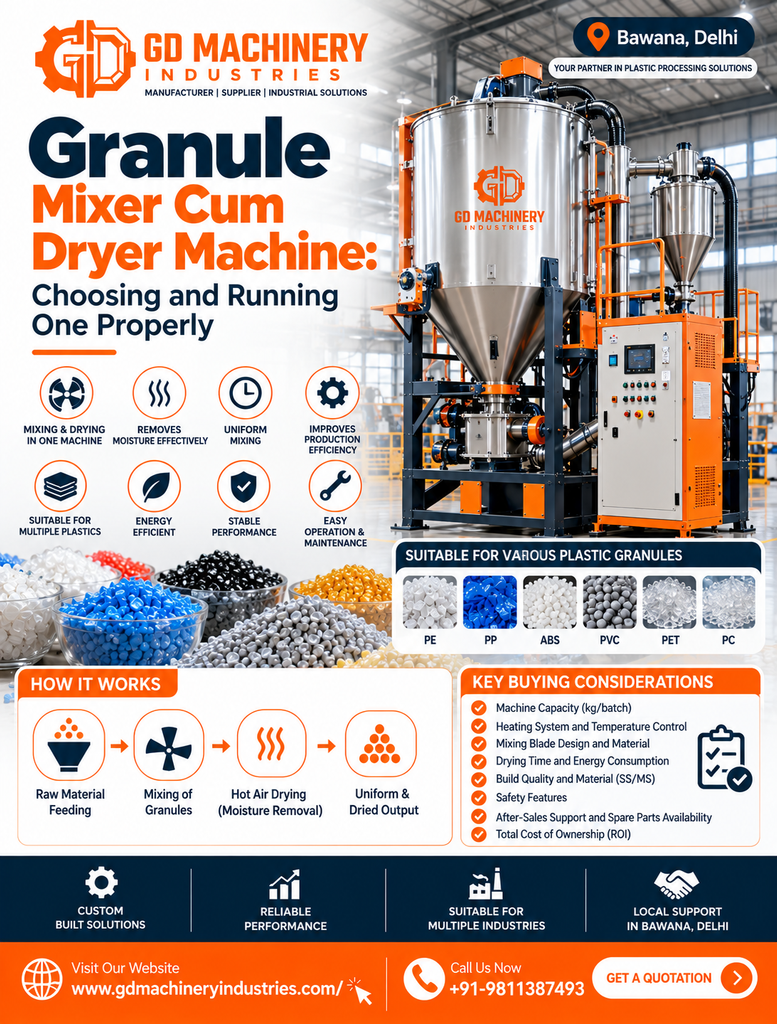
Two jobs in one machine
- Mixing spreads compatible granules, colour concentrates or additives evenly through a batch.
- Drying lowers moisture to a level that suits the polymer and the process.
Moisture tolerance varies by polymer, and some engineering plastics need a dedicated dehumidifying dryer rather than simple heated air. Overheating, under-drying or poor blending can each disturb downstream processing and the quality of the finished product.
Questions to settle with the supplier
- Which polymers is the machine designed for, and what conditions are recommended for each?
- Is the stated capacity a nominal figure or a recommended working batch?
- What are the heating method and temperature range, and how is the moisture target verified?
- How are loading, unloading and cleaning carried out?
- Which controls, manuals and operator training come with the machine?
Matching it to your production
Judge capacity against your usual batch, not your largest one. If you run several polymers, colours or additives, ask how easy cleaning and changeover are, because cross-contamination shows up as defects in later batches.
Trace the granules’ journey: where they are kept, how they get to the machine, and how finished batches are tagged and handed on. A good machine inside a messy material flow still delivers inconsistent results.
A repeatable batch routine
- Identify the batch by material grade and quantity.
- Load the recommended quantity rather than filling the machine to the brim.
- Run at the settings advised by the material supplier and the machine manual.
- Check the result. Where moisture matters, measure it instead of relying only on elapsed time.
- Transfer the batch and record the settings and outcome.
Written records let operators repeat good results and notice when something starts to drift.
Numbers worth tracking
- Batch-to-batch consistency
- Moisture level, where it is relevant to the process
- Changeover time
- Material wasted during cleaning and changeover
Bottom Line
A granule mixer cum dryer is most useful when its mixing and drying functions match what your process really needs. Before buying, tell the supplier your polymer type, usual batch size, moisture target and the operation that follows. That information is a far better basis for selection than capacity alone.
Frequently Asked Questions (FAQs)
1: What is the purpose of a granule mixer cum dryer?
A: It blends granules or additives and removes moisture in the same unit, for materials that suit this treatment.
2: Is one type of dryer enough for all plastics?
A: No. Some polymers tolerate hot air, while others need dehumidified air or other conditions.
3: Which factor should I weigh most when selecting one?
A: First confirm it suits your polymer, then look at working batch size, blending quality, moisture goal and controls.
4: Why check how easy it is to clean?
A: Residue from a previous run can contaminate the next batch when you change colour, additive or material.
Q: Who decides the drying settings?
A: The polymer maker’s data sheet and the machine manual do, rather than operator estimates.