
A roll that looks fine from the outside can hide wrinkles, damaged edges, splices or marks that only cause trouble later, on a printing press, laminator or bag-making line. An inspection rewinder gives you a controlled place to find those problems: the roll is unwound, examined and rewound into a new roll.
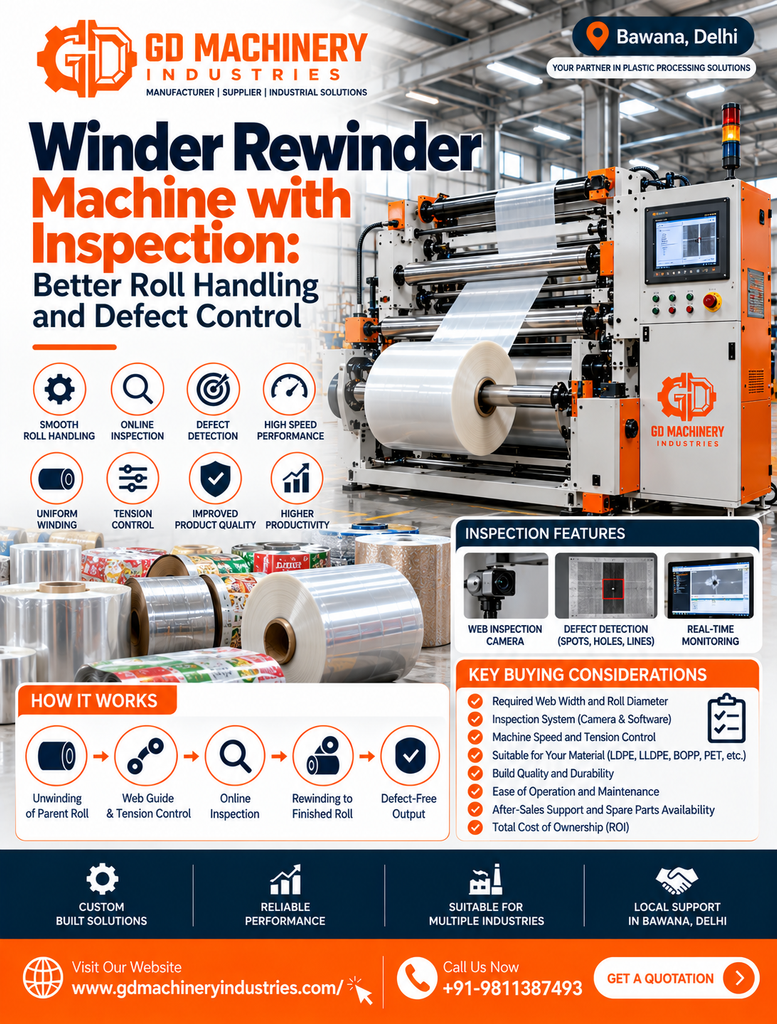
What happens on the machine
The web travels from the supply roll along a path that gives a person, or an inspection system, a clear view of it. It is then rewound. Depending on the model, the path may include tension control, web guiding, defect marking or slitting.
Visual inspection versus automated detection
Not every inspection rewinder detects defects automatically. Some rely on a trained operator working under good lighting, while others add camera-based systems. These are separate features at different price levels, so confirm exactly which one is included in the proposal.
Materials the machine may handle
Many films, laminates, woven fabrics and non-wovens can be handled on a machine of this kind. Thickness, stiffness, surface character and width all affect web handling, and delicate substrates need careful tension settings to avoid stretching, wrinkles or edge damage.
Specifications to compare
- Working width
- Unwind and rewind roll diameters, core sizes and roll weights
- Line speed and how it is adjusted
- Tension control and web guiding
- Inspection lighting and operator visibility
- Defect marking and slitting options
- Roll-change procedure
- Guarding and emergency stops
Agree on what counts as a defect
A machine does not decide what is acceptable; people do. Prepare a brief guide to the faults that matter for your material, for instance scratches, ragged edges, creases, print flaws and joins, and set the action for each one: flag it, halt the line, remove the length or simply note it.
Apply the same standard on every shift, and record defect type, rejected length, downtime and rework. Over time those records show where problems start.
What a rewinder cannot do
It can locate or separate faulty sections, but it cannot remove the cause. If the same defect keeps appearing, look upstream at process control or at the material supplier.
Final Thoughts
A well-chosen winder rewinder with inspection supports controlled roll handling and earlier detection of visible defects. Verify the machine’s features, material compatibility and inspection method before you buy, and give suppliers a detailed application brief so they can propose a practical configuration.
Frequently Asked Questions (FAQs)
Q: What does an inspection rewinder do?
A: It runs a roll through an examination zone and winds it onto a fresh core, ready for the next process or for shipping.
Q: Will the machine spot flaws on its own?
A: Only if it includes an automatic detection system. Many units depend on a trained operator looking at the web.
Q: Which substrates suit this equipment?
A: Films, laminates, woven and non-woven fabrics may run well, depending on the machine’s design and settings.
Q: What role does tension play?
A: Correct tension reduces creases, stretching and loose or telescoped rolls.
Q: If it finds a defect, is the problem solved?
A: Not by itself. The faulty section can be marked or removed, but the source in earlier processing still needs attention.