
Bawana Industrial Area is home to businesses making many different products, and almost all of them reach the same moment sooner or later: the existing equipment is no longer enough. Planning that purchase well tends to save more money than hard bargaining at the end. This roadmap lays out the stages in the order they usually happen.
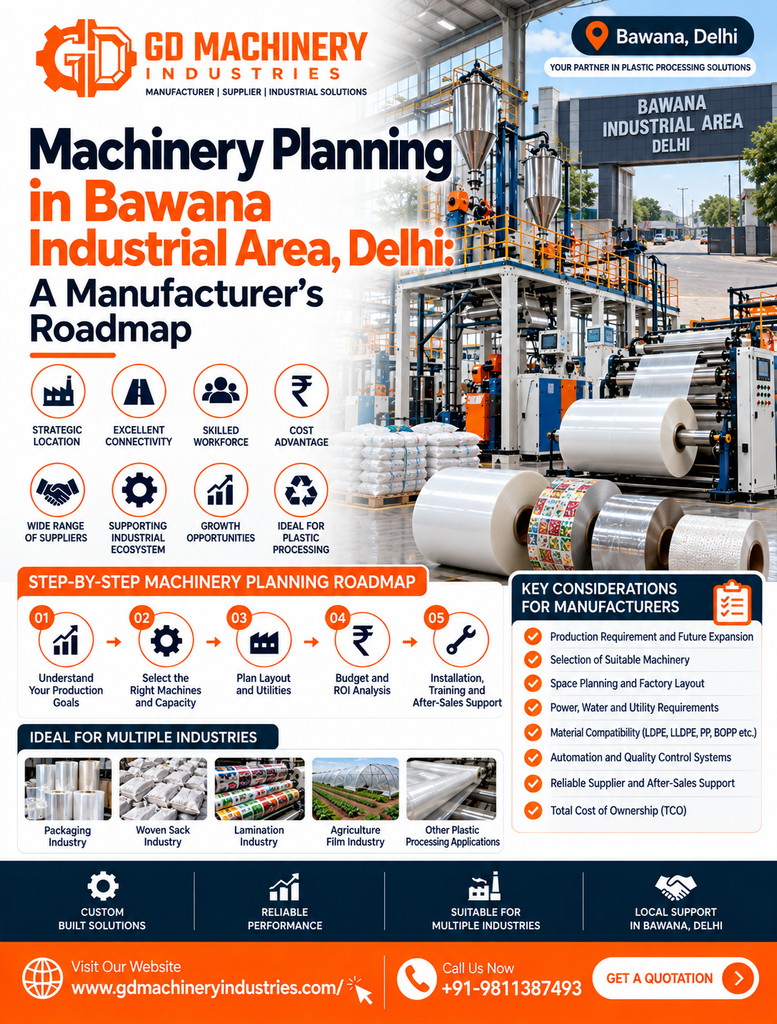
Stage 1: Name the reason for buying
Are you adding capacity, replacing worn equipment, launching a new product or chasing better consistency? The answer shapes everything else. Record the material, product dimensions, target output and quality requirements, and note any existing machine that the new one must work alongside. Avoid buying on a broad category name alone, because two machines described the same way can differ in working width, supported material, controls and real-world output.
Stage 2: Check your site
- Floor area and the route a delivery vehicle and the machine will take
- Ceiling height and loading space
- Clearance for operation and maintenance
- Electrical supply, cooling and ventilation needs
- Storage for raw material, work in progress and finished goods
- Room for material changes and cleaning, not only the machine footprint
When people can move safely and reach the machine for servicing, everyday running becomes much easier.
Stage 3: Shortlist suppliers
Put three questions to every supplier: do you make the type of machine I need, which specifications can you provide, and what delivery or service can you promise at my location? Request a written technical specification and, for a critical application, a demonstration or a material trial. If a site visit matters to you, confirm it directly instead of assuming it is possible.
Stage 4: Compare like with like
A lower price can simply mean fewer accessories or services. Read the scope of supply, delivery terms and list of inclusions closely, and agree who handles unloading, installation, commissioning and operator training before you confirm.
Stage 5: Prepare for installation and handover
Agree the delivery date, make sure utilities are ready, schedule staff for training and plan routine maintenance from day one. Review manuals and warranty terms at handover so everyone knows who to call and what to do when something needs attention.
A note on local search
People often add ‘Bawana’ or ‘Delhi’ to their online searches. Businesses can respond by keeping their details consistent, using real photographs and describing their products honestly. They should not suggest a workshop, service centre or delivery capability they do not have. Buyers, in turn, should treat a listing as a starting point and confirm technical and commercial terms directly.
Bottom Line
Buying machinery in an industrial area is about more than locating a nearby seller. Define the application, prepare the site, compare written proposals and agree on support. Following these stages cuts uncertainty and keeps the equipment decision tied to what the business actually needs.
Frequently Asked Questions (FAQs)
Q: What should be settled before a factory orders new equipment?
A: Decide the purpose, material, output, quality level, available space, utilities and how it will fit with machines already installed.
1: Why does the shop-floor layout deserve attention?
A: It governs delivery, safe movement, servicing and the room staff need to work around the machine.
2: Is price enough to rank competing offers?
A: No. Weigh inclusions, specification, installation, training, warranty and expected running costs too.
3: Does appearing in an online search prove a supplier is capable?
A: No. Search results help you find companies, but the products, address and service terms must be confirmed with the company.
4: What should a machinery company’s website contain?
A: Accurate product information, applications, real photographs, contact details and an easy way to send an enquiry.