
Packaging is rarely a single material. Makers combine layers to balance strength, finish, flexibility, sealing and barrier performance, and lamination is how those layers are joined. Before you shop for equipment, note that ‘lamination machine’ and ‘coating machine’ describe overlapping but different configurations, so check what each supplier is really offering.
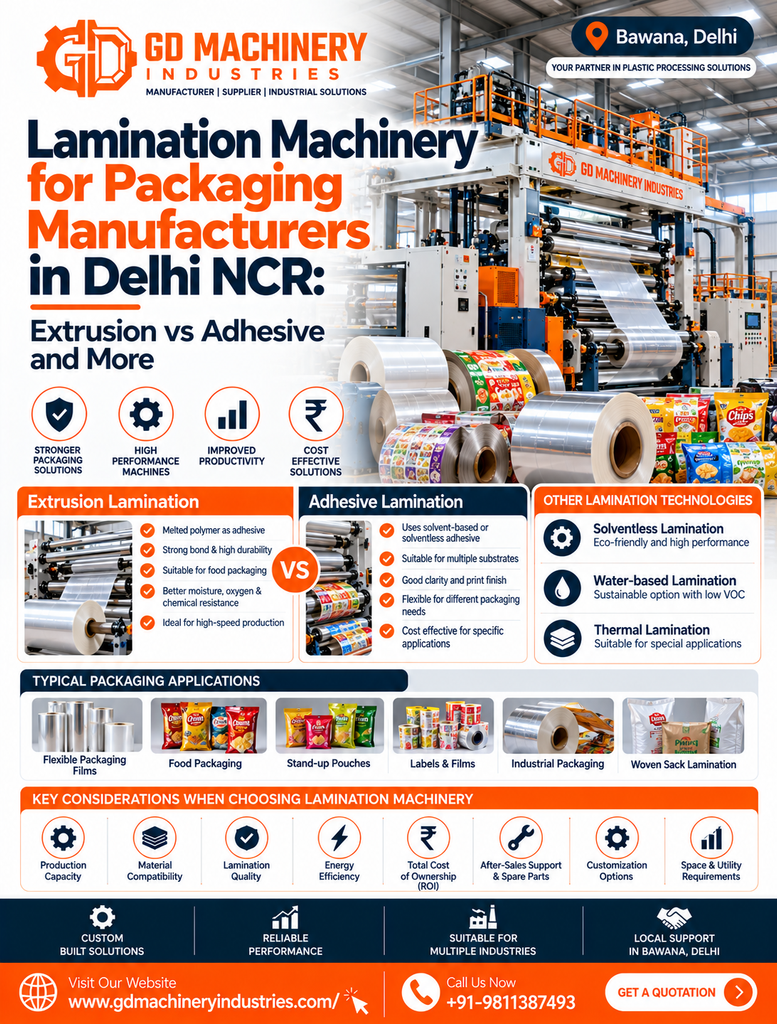
Two routes to the same goal
| Aspect | Extrusion lamination | Adhesive lamination |
|---|---|---|
| Bonding layer | Molten thermoplastic polymer | A formulated adhesive |
| Additional stage | Cooling so the polymer layer sets | Drying or curing, depending on the system |
| Key equipment | Extruder, flat die, nip rollers | Adhesive application unit and drying or curing arrangement |
| Selection depends on | Substrate pair, polymer, coating weight | Substrate pair, adhesive system, utilities |
Neither process is best everywhere. The right choice follows from the substrate combination, performance target, volume, available utilities and cost model, so discuss your specification with a qualified supplier before choosing a technology.
Parameters that shape production
- Working width and the range of substrates the machine is built for
- Coating weight range
- Line speed under your intended conditions
- Tension control and cooling
- Winding quality and changeover requirements
Ask whether any surface treatment or special process control is needed. Maximum speed figures can mislead if they were not measured on your substrate, coating weight and quality target.
Judge quality against the end use
A laminated structure should be tested against the demands of the product it will pack. Depending on the use, that may mean bond strength, coating uniformity, appearance, flexibility or barrier performance. Food-contact and other regulated applications may require extra documentation and a compliance review by qualified specialists.
Log material batches and machine settings so any variation can be traced back.
Think one step downstream
A roll can leave the laminator looking acceptable and still cause trouble in printing, slitting, bag making or sealing. Describe those later operations to your supplier, and decide which characteristics are checked at lamination and which are assessed later. A clear quality plan makes it easier to find out where a variation began.
Planning for a Delhi NCR factory
Look at the floor area, where incoming rolls will wait, how rolls will be moved, the power supply, cooling and airflow, and how operators will safely reach the line. Also decide how it will connect with printing, slitting and bag-making machines.
Give suppliers your substrate details, output target, finished-product needs and site limits. The fuller the enquiry, the easier it is to compare offers and notice extra equipment you may need.
Bottom Line
The right laminator is whichever one consistently produces your packaging structure at the volume you need. Weigh the process type, which substrates it accepts, how quality is controlled, safety, service and cost to run, and open every discussion with a precise technical brief.
Frequently Asked Questions (FAQs)
1: How do the two lamination methods differ?
A: One bonds layers with melted polymer, the other with an applied adhesive that may need drying or curing.
2: Is there a single machine for all packaging films?
A: No. Which materials a machine can run depends on its design and the process it uses.
3: What should I tell a supplier about my project?
A: State the materials, width, target coat or bond level, expected output and how the pack will be used.
4: How can I test the quality of laminated rolls?
A: Choose checks that fit the end use, such as bond strength, coat evenness, look and barrier needs.
5: What needs preparing before the line arrives?
A: Plan space, utilities, roll handling, operator access and links to the machines before and after it.