
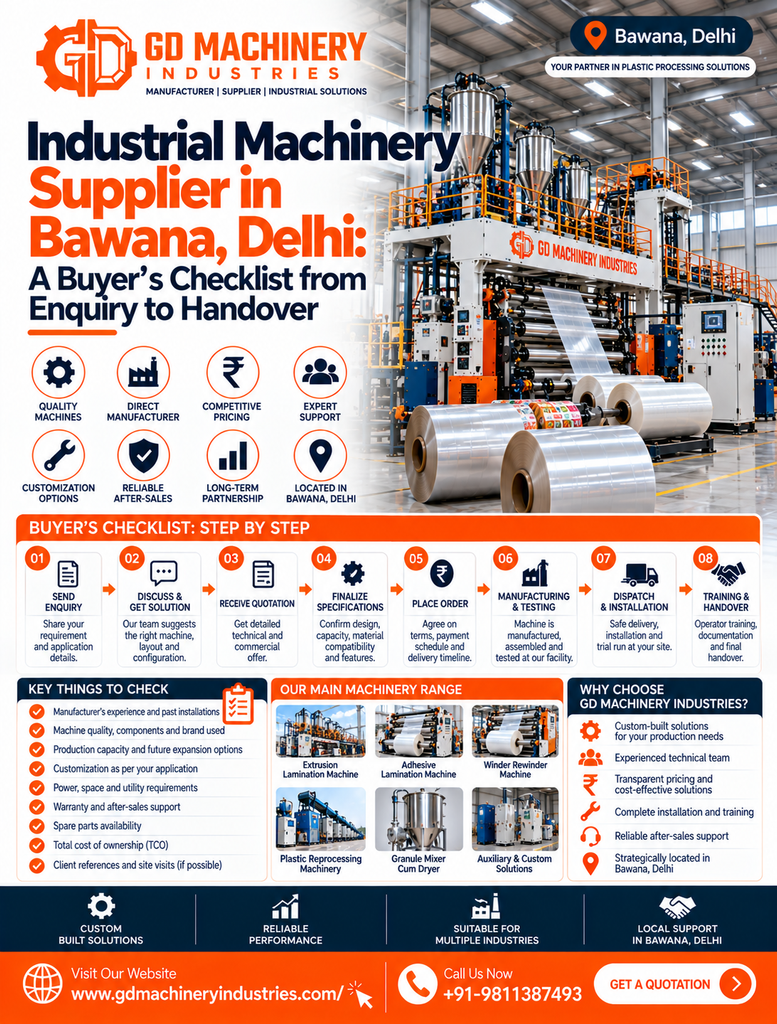
Finding a supplier is the easy part. The real work lies in everything that follows: making sure the equipment suits the job, understanding what the quotation covers, and planning delivery and day-to-day running. A checklist keeps that process orderly, whether you are buying your first machine or extending an established line.
Before you enquire
- List the material, product sizes, capacity target, running hours and quality expectations.
- Note existing equipment and any limits at your factory site.
- Gather samples, drawings or product specifications if you have them.
- Explain the result you want rather than naming a machine type.
When the quotation arrives
- Does it list the machine configuration, technical specifications and included accessories?
- Are exclusions, delivery terms and installation or commissioning responsibilities stated?
- Are operator training, manuals, warranty and spare parts included, or quoted separately?
Settle the commercial terms before ordering, and if delivery, installation or performance milestones are important, put each party’s duties in writing.
Before you order
- Judge overall value rather than the sticker price, including utilities, consumables, upkeep, likely downtime and scrap.
- Ask for evidence behind key performance claims and the conditions used for any output estimate.
- Request a demonstration or material trial where quality is critical.
- Ask how technical questions are handled and how a warranty or service request is raised.
- Check that operators can reach controls safely and that cleaning and maintenance will not disrupt production unnecessarily.
A bargain price can turn expensive if essential parts or services were left out of it.
At delivery and commissioning
- Match what has been installed against what was agreed.
- Carry out the commissioning tests that apply.
- Make sure operators receive documentation and training for safe use.
After handover
File the final specification, quotation, clarifying emails and commercial terms in one place. Add a note on why this set-up won, what it satisfies and which compromises you accepted. Keep commissioning notes, training logs and maintenance guidance somewhere operators can easily reach.
Any requirement the supplier could not confirm should stay on the list as open, not be assumed. That is especially important for products with tight quality tolerances. When a later product calls for another material or a wider operating window, read the recorded specifications first instead of presuming the existing machine can manage. Set up a clear route for reporting faults, ordering parts and asking for technical help.
Bottom Line
Sound purchasing blends technical scrutiny, clear commercial terms and honest cost planning. When you look for an industrial machinery supplier in Bawana, Delhi, check product fit and support coverage with the company itself, then measure every written proposal against one set of requirements. The outcome is a choice you can explain with confidence.
Frequently Asked Questions (FAQs)
1: What should I include when I contact a supplier?
A: Mention the material, sizes, expected output, quality needs, working conditions and any limits at your site.
2: Why is a written offer worth insisting on?
A: It records what is supplied, what is left out, delivery terms and who is responsible for each task.
3: Is it sensible to ask about spares early?
A: Yes, since parts availability and upkeep affect both uptime and cost.
4: How do I make a fair comparison between suppliers?
A: Give both the same brief and then compare specifications, services, exclusions and total ownership cost.
5: Why watch a demonstration?
A: It shows how the machine behaves and whether it fits your job, particularly when your own material is used.