
A machine can look impressive on paper and still be a poor match for the product that has to run through it. That gap between brochure and factory floor is the main reason manufacturers should slow down before committing to new equipment. If you are searching for industrial machinery in Bawana, Delhi, the aim is not to find the cheapest listing. It is to find equipment that suits your material, your volumes and your building.
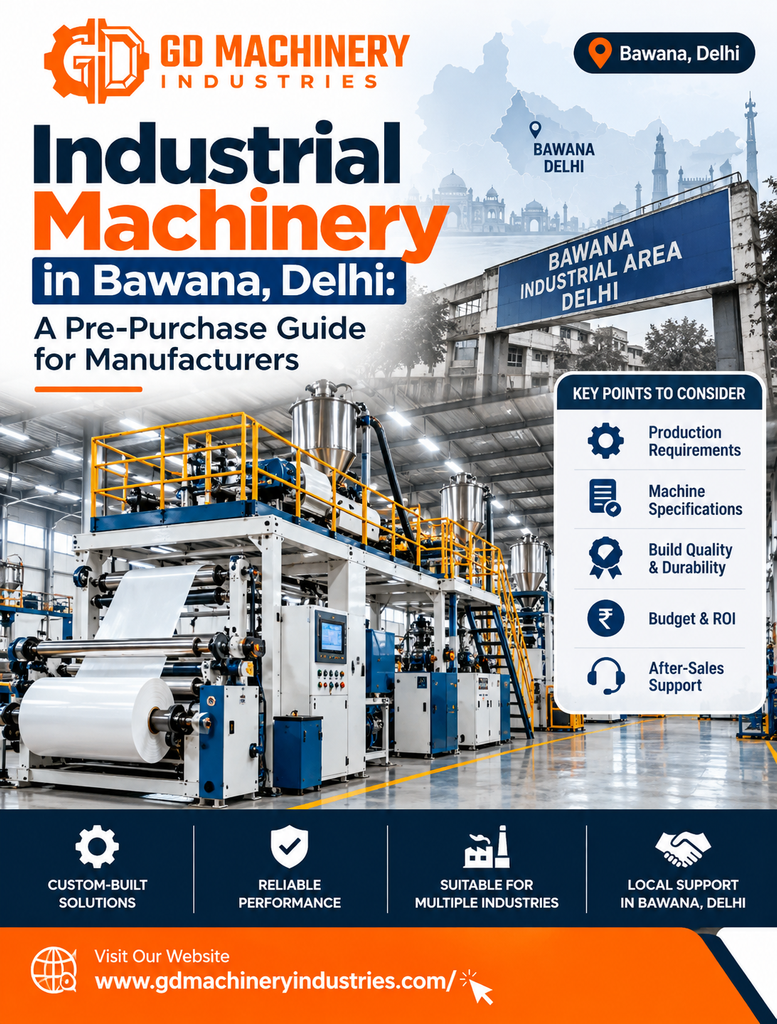
GD Machinery Industries operates from Bawana, and the points below reflect the questions a careful buyer should settle before any purchase order is signed.
Start from the product, not the machine
Write down what the machine will actually make. A one-page note is enough, provided it covers the following:
- The material that will run through the equipment, and whether it changes from job to job
- Width, thickness and any size limits of the finished product
- Batch size and the output you genuinely need per shift
- The surface finish or performance your end customer expects
- Number of shifts per day and planned working days
Share this note with every supplier you approach. When each of them answers the same brief, the replies become comparable and vague claims are easier to spot. Ask every supplier to state the conditions under which the quoted capacity can be reached.
Look at the whole line, not only the main unit
The headline machine rarely works alone. Depending on the process, you may also need material feeders, unwinding or winding stations, cooling, electrical panels, handling aids and utilities. Some jobs add a preparation or finishing step on either side of the main operation.
Ask the supplier to split the offer into three lists: what is included, what is optional, and what you must arrange yourself. Then check your own site against that list for floor area, power load, ventilation and the clearance a technician needs to reach serviceable parts.
Count what it costs to own, not just to buy
The invoice is only the first number. Over the years a machine runs, electricity, consumables, scrap, cleaning time, stoppages and maintenance can add up to a sum that rivals the purchase price. When two machines are compared, run the same material, the same output target and the same shift pattern through both estimates. Anything less compares marketing, not machines.
Useful questions to put to each supplier:
- Which parts wear out, and how often do they need replacing?
- Which routine maintenance tasks can our own staff handle?
- Are installation guidance, operator training and spare parts part of the offer?
- Which documents, such as manuals and wiring diagrams, arrive with the machine?
Treat safety as part of the specification
Inspect guarding, emergency stops, isolation points and how easily a technician can reach the parts that need service. Equipment that is awkward to clean or adjust tends to be operated badly. Ask to see the operating documentation before ordering rather than after delivery.
What a Bawana address does and does not tell you
Being nearby helps in practical ways: site visits, quicker conversations and easier follow-up. But proximity is not proof of capability. A supplier’s real service area, product range and support terms should be confirmed in writing. A trustworthy company website states its genuine address, shows real photographs of its products and explains the applications it supports, rather than leaning on location keywords alone.
Allow for tomorrow without overpaying for it
It is sensible to ask whether a planned change, such as a wider material, a new product or higher volume, would strain the machine you are considering. Treat the answer as a question about real business plans. Flexibility that is never used is simply money spent early.
Build a one-page comparison sheet
Give every supplier a column on one sheet. Fill in the offered set-up, the test conditions behind the stated output, bundled extras, who handles installation, training, warranty and your running-cost estimate. Highlight each open question and settle it before final prices are compared. If a supplier proposes something different from your brief, ask for the technical reason and what it does to the total project cost.
Why a good enquiry form helps both sides
A short form that asks for the material, the product being made, approximate dimensions and a preferred contact method gives a sales team something concrete to respond to. It should not promise any output before those details have been reviewed. For the buyer, it is a lower-pressure way to begin a technical conversation.
Final Thoughts
Good machinery decisions begin with your own product and finish with a complete written quotation. Pin down the requirement, examine the entire line, estimate honest running costs and confirm what support follows the sale. Enquiries that arrive with clear application details are easiest for GD Machinery Industries to answer well, so gather your material data and output goals first.
Frequently Asked Questions (FAQs)
1: Which details help a supplier understand my machinery requirement?
Ans: Tell them what you manufacture, the raw material, key sizes, the daily output you want, how many hours the plant runs and the finish or quality your customers expect.
2: Does the lowest quote usually mean the best deal?
A: Rarely. A cheaper offer may omit accessories, training or after-sales help that a higher offer includes, so line up scope and running costs side by side.
3: Why insist on a written equipment specification?
A: Because it fixes what you are paying for, separates standard items from paid extras and gives you something to check at delivery.
4: What should I inspect at my own premises before placing an order?
A: Look at available floor area, power capacity, airflow, service access and storage space for material and finished goods.
5: Will a supplier based in Bawana send machines to other cities?
A: Possibly, but only the supplier can say. Ask for its delivery and service coverage in writing before you commit.